

Agile vs waterfall explained in plain words, with a simple way to decide which method fits your project and when a mix of both works best.

Agile vs waterfall is one of the oldest arguments in software. Waterfall plans the whole project first and builds it in order. Agile builds in short rounds and changes the plan as the team learns. Each side has fans, and each side has numbers that claim it wins. Many of those numbers do not say how they measured success. In practice, many teams stop picking a side. In a Digital.ai survey of nearly 350 agile practitioners, 74% said they use hybrid, blended, or homegrown agile models. This guide explains how each method works and when each one fits.
How Waterfall and Agile Work
Waterfall moves through fixed stages, one after the other. The team gathers all the requirements, designs the product, builds it, tests it, and then releases it. Each stage ends before the next one begins.
Agile works in short rounds, usually a few weeks long. In each round the team plans a small piece, builds it, tests it, and shows it to users. What they hear shapes the next round.
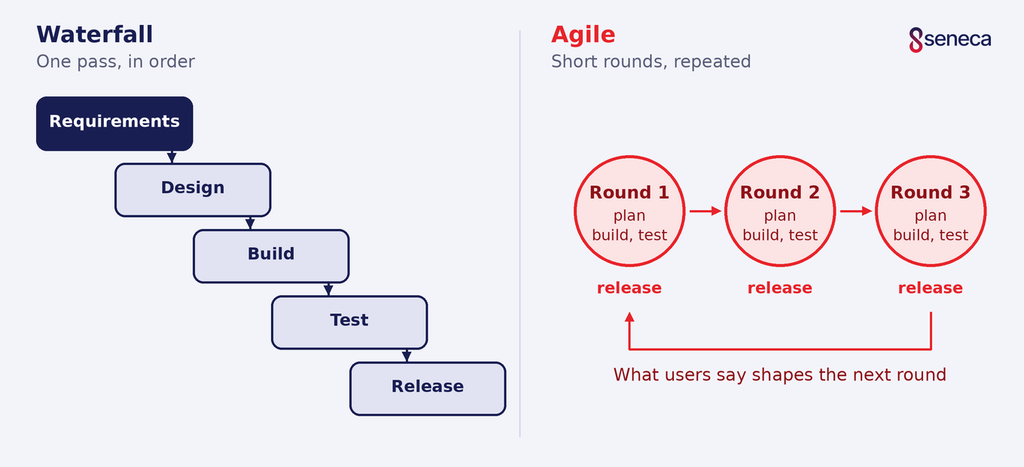
Think of a restaurant. Waterfall is like printing the full menu, cooking every dish, and opening the doors on day one. Agile is like serving a few dishes first and changing the menu based on what guests order. Waterfall plans everything up front, and agile plans a little before each round.
Waterfall: Strengths and Limits
Waterfall gives you a clear plan. The budget and deadline are known early, and it is easy to see whether the team is on track. Detailed documents also help new team members and anyone who has to approve the work. The limit is that changes get harder once a stage ends. Users also see the product late, so surprises arrive late too.
Agile: Strengths and Limits
Agile shows users working pieces early. The team can change direction as it learns, and problems show up within weeks, long before the final release. The limits are a looser budget and end date, and a need for steady input from the client or users. Without a clear goal, the work can also drift.
Agile vs Waterfall: What Happens When Requirements Change
Requirements change on almost every project. A customer asks for a new feature, a law changes, or the team learns that an early idea does not work. The cost of that change depends on when it arrives.
In waterfall, a lot of work depends on the early plan. A change during testing can send the team back to design, so late changes tend to cost more. Agile works in small pieces, so each change touches less finished work.
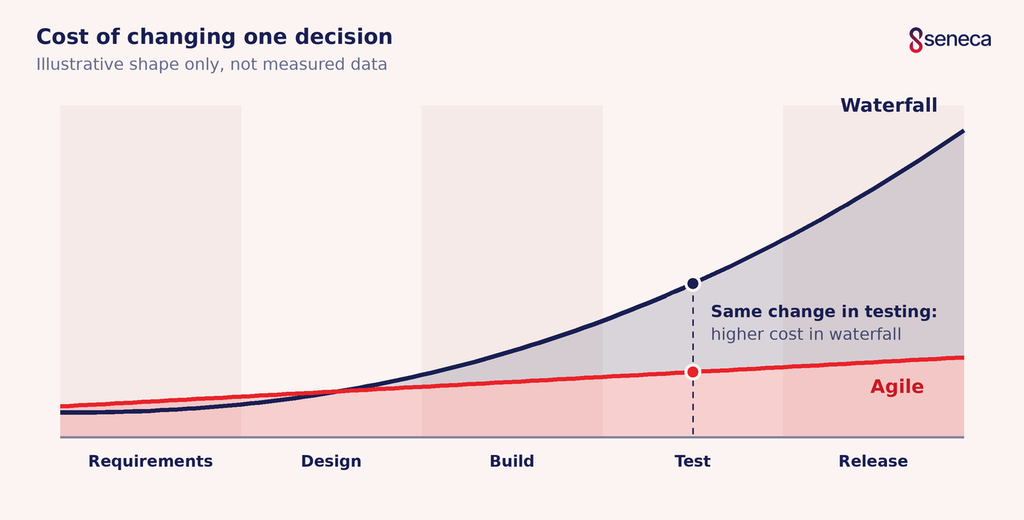
The chart shows the general shape of the idea. Real costs depend on the project, and agile still has rework.
Agile vs Waterfall: How to Choose Your Method
Two questions help most with the choice. How stable are your requirements, and how much do you need user feedback early?
Choose Waterfall When the Plan Is Clear
Waterfall fits when you know what you need and expect it to stay the same. Fixed-price contracts often work this way, because the scope is agreed before the work starts. Regulated work can also lean toward waterfall, since it may require signed-off documents at each stage. A data migration with known steps is a good example.
Choose Agile When You Expect to Learn Along the Way
Agile fits when the requirements are unclear or likely to change. A new product for a new market is a good example, because you cannot know what users want until they try it. Each round gives you something real to test, so you can adjust before you spend the whole budget.
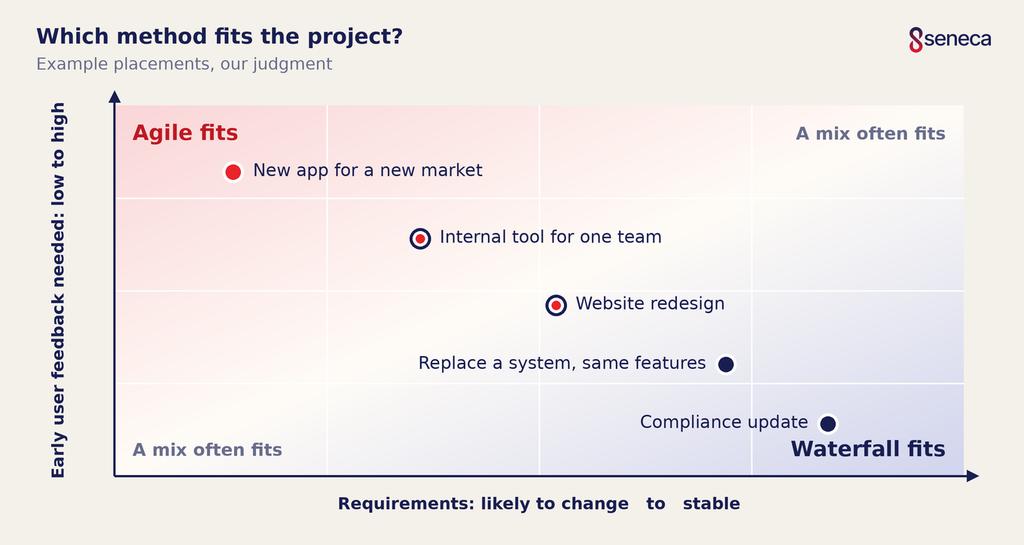
The map places a few example projects. Most real projects fall somewhere in the middle, and a mix of both often works there.
When a Mix of Agile and Waterfall Makes Sense
Many teams use both. A common setup fixes the scope and the deadline up front, as waterfall does. The team then builds the product in short agile rounds. Another setup uses agile to build the product. It keeps waterfall-style sign-offs for parts that need approval, such as a security review.
A mix works best when you can say why each part is there. If you are unsure where to start, go back to the two questions from the fit map: how stable the requirements are, and how much early feedback you need.
Agile vs Waterfall: Key Differences at a Glance
The table below sums up how the two methods differ.
| Waterfall | Agile | |
|---|---|---|
| How work flows | Fixed stages, one after the other | Short rounds, repeated |
| Requirements | Set up front | Can change between rounds |
| User feedback | Mostly at the end | After every round |
| Late changes | Tend to cost more | Tend to cost less |
| Budget and deadline | Fixed early | Spread over many rounds |
| Documentation | Detailed, signed off at each stage | Lighter, updated as you go |
| Best fit | A clear, stable plan, or work that needs formal approvals | Unclear or changing requirements, such as a new product |
Agile vs Waterfall Example: Building a Booking App
Say a company wants a booking app. In month three, the client decides that customers should pay a deposit when they book.
With waterfall, the team has already finished the design and most of the build. The deposit changes the payment flow, the screens, and the tests. The team goes back to design, updates the documents, and reworks code that already exists. The change fits, but it costs time and money.
With agile, the team has shipped two rounds of small features, and the next round starts in a week. The team adds the deposit to the plan for that round. Only the booking and payment pieces change, and users can try the new flow within weeks.
Either path can go wrong. Waterfall could have caught the deposit in the first requirements meeting, and agile can still miss a deadline if the team keeps adding features.
Enjoyed this article?
Let’s talk about how a focused outsourcing partner can move your roadmap forward.